Golden Triangle India Tour Logo
English| EUR
Suggested for you
More currencies
Book Now
Open today · 00:00–23:59

Golden Triangle India Tour

Golden Triangle India Tour — Delhi, Agra & Jaipur Heritage Circuit

Three cities, three centuries of empire, one timeless route through Mughal and Rajput India

4.7 /5 · 2,400 reviews
26K+ travelers chose this
Free Cancellation
Right now: Moderate The Golden Triangle india tour circuit remains accessible year-round.
6-7 days typically
1 Languages
Private or small groups
Free Cancellation
Free cancellation Instant confirmation Mobile voucher Verified partner Skip-the-line
Choose your ticket

Golden Triangle India tickets at a glance

Compare fares, pick the fit — all bookings are mobile-voucher and eligible for free cancellation where shown.

Private Golden Triangle: Delhi, Agra & Jaipur Luxury Tour 96 hr
Luxury / Private

Private Golden Triangle: Delhi, Agra & Jaipur Luxury Tour

4.9 (308)
€120
  • Private experience
  • Personal attention
  • Premium amenities
  • Free cancellation
Book this ticket
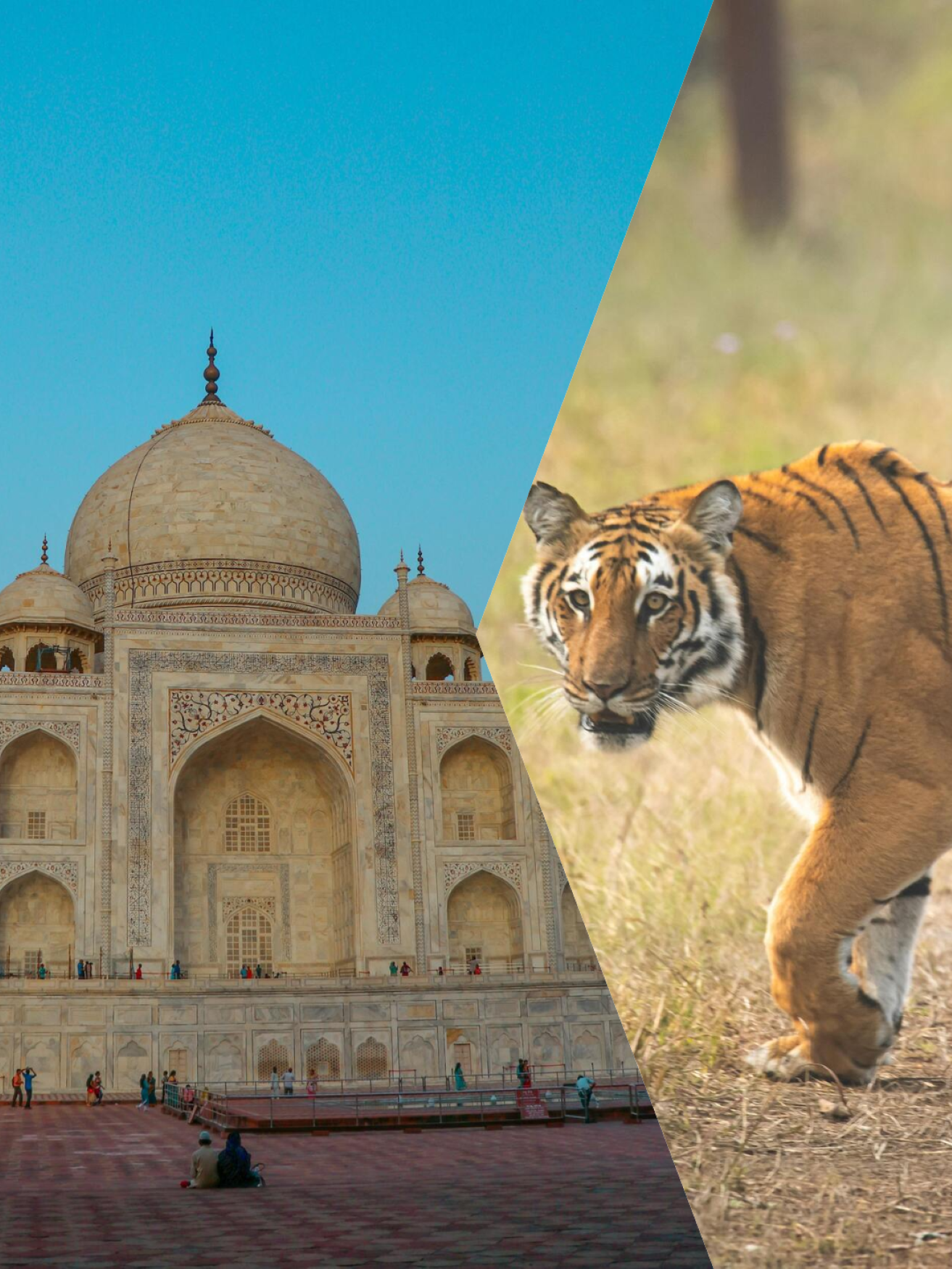
Golden Triangle Tour with Tiger Safari 72 hr
Guided Experience

Golden Triangle Tour with Tiger Safari

4.8 (109)
€84
  • Expert local guide
  • Small group
  • Skip-the-line access
  • Free cancellation
Book this ticket
Compare options

Compare Golden Triangle India ticket options

Experience DurationRatingTransfersPickupGuideFree cancel. Price
Luxury / Private
Most popular
Private 3-Day Golden Triangle Tour from Delhi
72 hr★ 4.8✓✓✓✓ €78 Book →
Luxury / Private
Private Golden Triangle: Delhi, Agra & Jaipur Luxury Tour
96 hr★ 4.9✓✓✓✓ €120 Book →
Guided Experience
Golden Triangle Tour with Tiger Safari
72 hr★ 4.8✓✓✓✓ €84 Book →
Featured Experiences

Popular Golden Triangle India tours & activities

Hand-picked experiences loved by thousands of travelers

Recommended Experience

Powered by GetYourGuide

Another traveler favorite

Powered by GetYourGuide
Delhi Golden Triangle Private Tour 3 - 5 days Free Cancellation

Delhi Golden Triangle Private Tour

Discover India's iconic trio across 3-5 days with private transport, expert guides, and flexible scheduling

4.7 (49)
FromFrom €86.58
See details
Private 3-Day Golden Triangle Tour from Delhi 3 days Free Cancellation

Private 3-Day Golden Triangle Tour from Delhi

Discover India's most treasured monuments across Delhi, Agra, and Jaipur with luxury stays and expert guides

5 (38)
FromFrom €300.19
See details
Private 4-Day Golden Triangle Tour with Hotels 4 days Free Cancellation

Private 4-Day Golden Triangle Tour with Hotels

Experience Delhi, Agra, and Jaipur on an all-inclusive private journey through India's iconic trio

5 (8)
FromFrom €94.21
See details
Private 3-Day Golden Triangle Tour with Hotels & Guide 3 days Free Cancellation

Private 3-Day Golden Triangle Tour with Hotels & Guide

Discover Delhi, Agra, and Jaipur on an all-inclusive private journey through India's most iconic cities

5 (6)
FromFrom €112.27
See details
5-Day Golden Triangle: Delhi, Agra & Jaipur Private Tour 5 days Free Cancellation

5-Day Golden Triangle: Delhi, Agra & Jaipur Private Tour

Discover India's iconic heritage circuit with expert guides, sunrise at the Taj Mahal, and royal forts

5 (4)
FromFrom €140.39
See details
3-Day Golden Triangle: Delhi, Agra & Jaipur 3 days Free Cancellation

3-Day Golden Triangle: Delhi, Agra & Jaipur

Discover India's iconic trio with private transport, expert guides, and stays at premium hotels

FromFrom €26.79
See details
Your journey

Your Golden Triangle India day, step by step

1

Delhi Exploration

Visit Red Fort and Humayun's Tomb

2

Agra Visit

See Taj Mahal and Agra Fort

3

Jaipur Experience

Explore Amber Fort and City Palace

What you'll see

What you'll see at Golden Triangle India

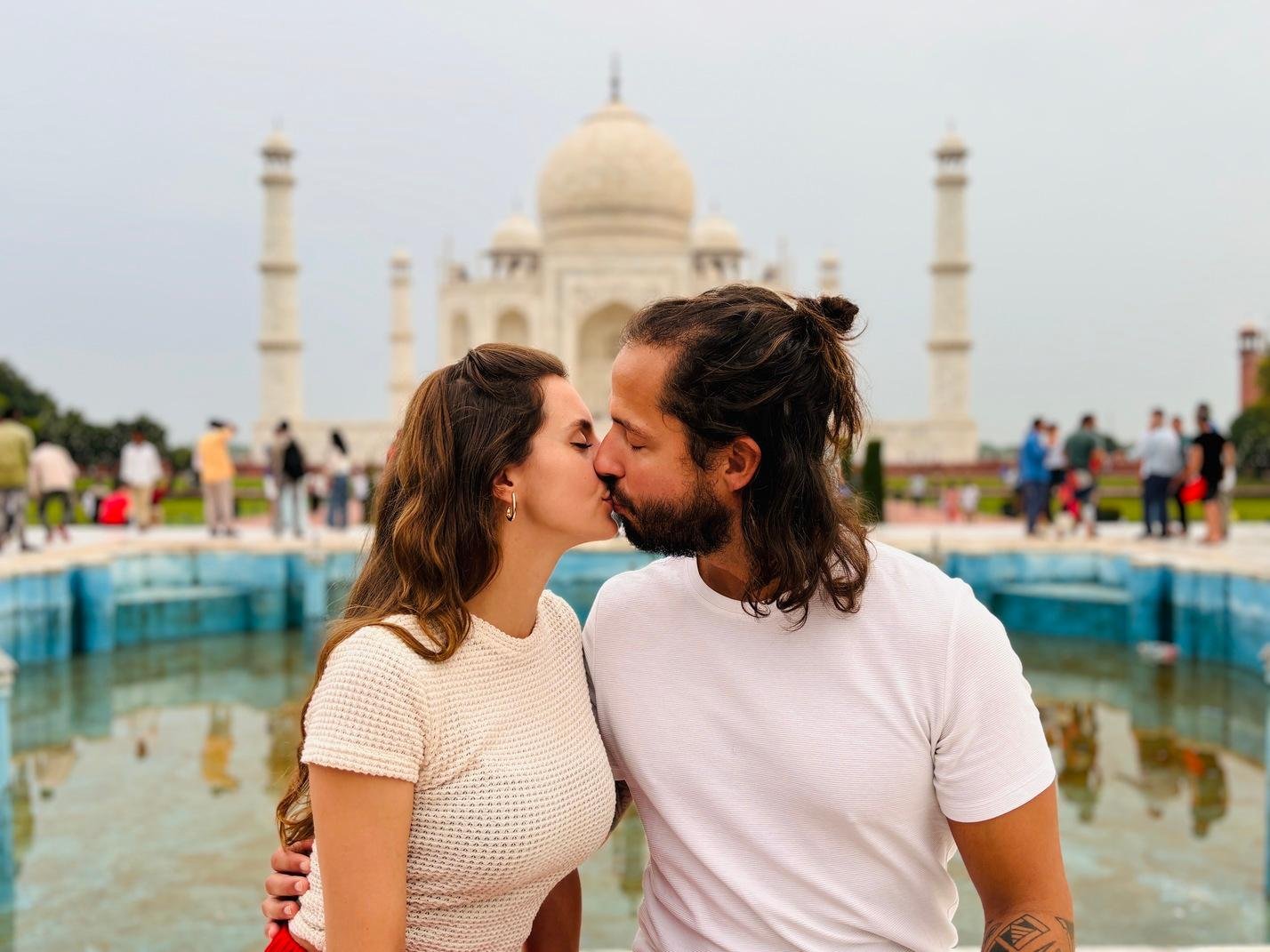
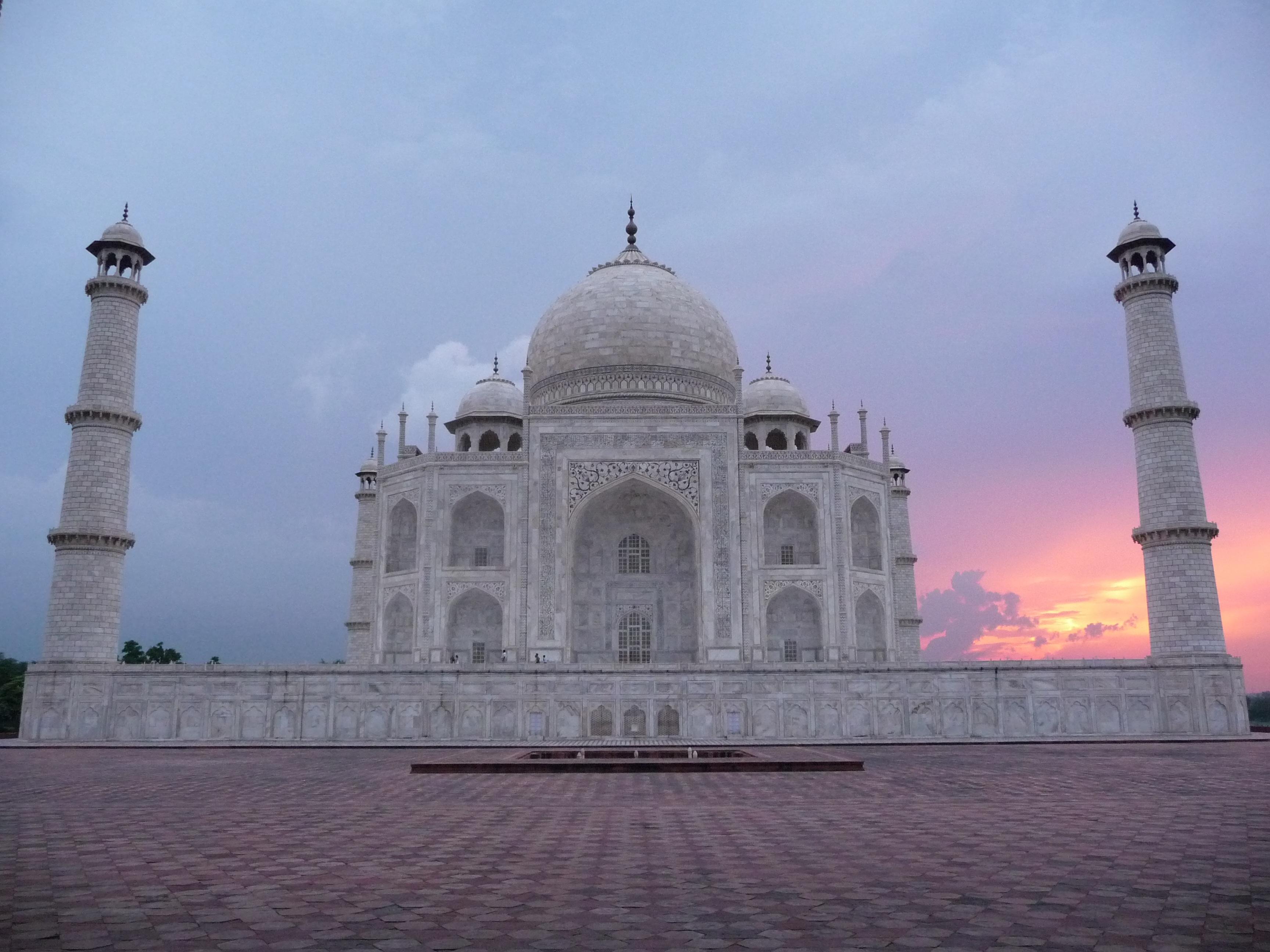
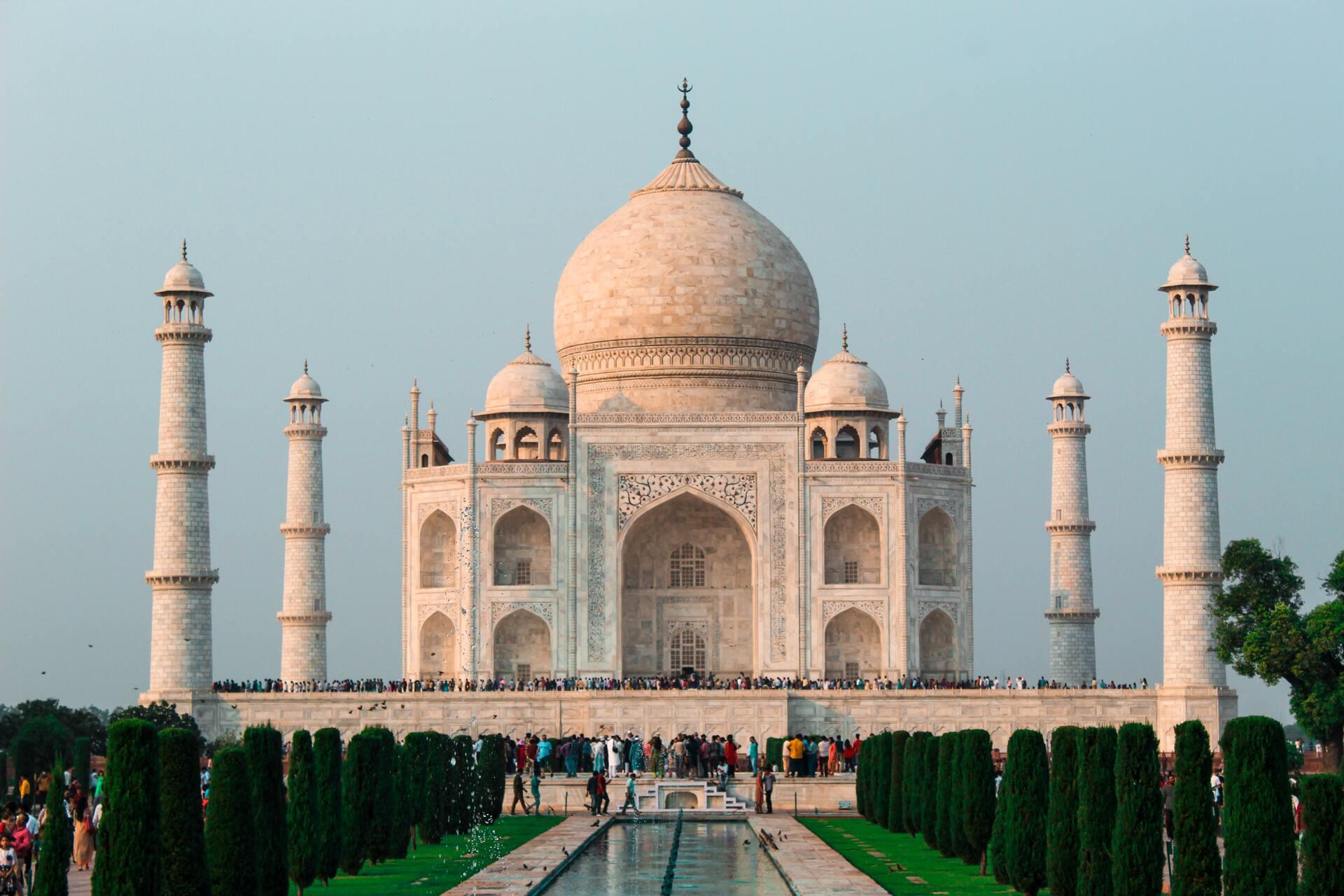
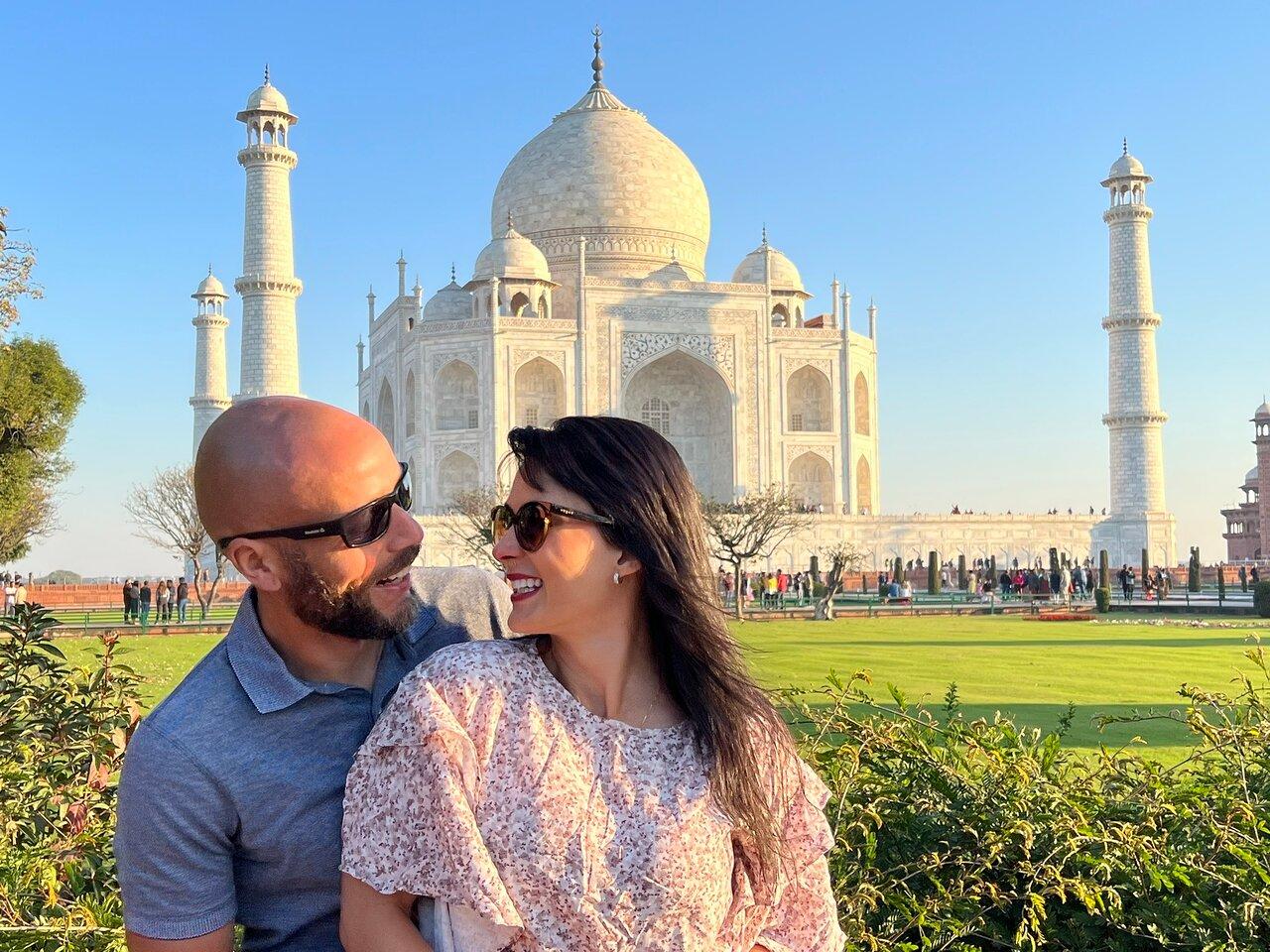
Taj Mahal

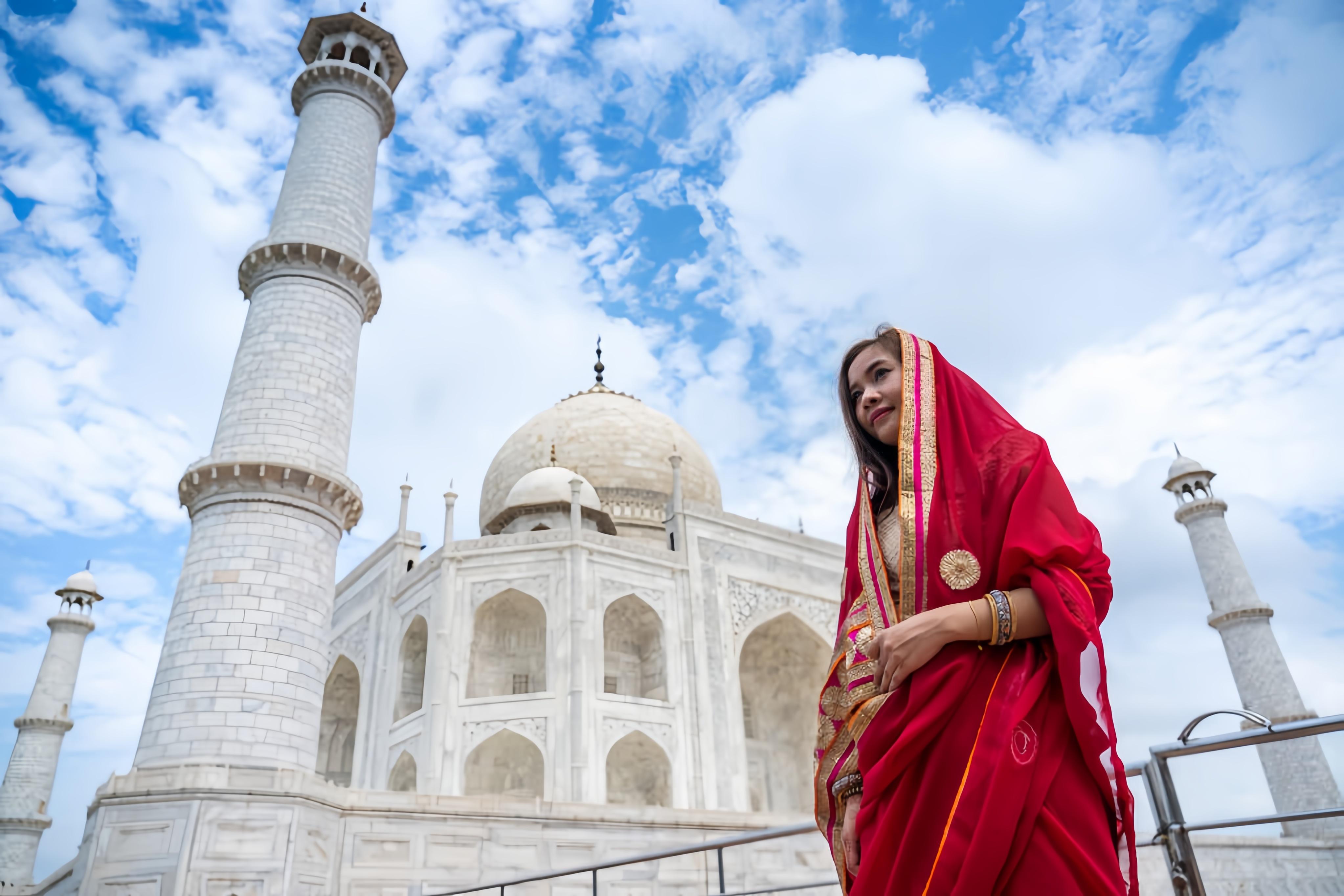
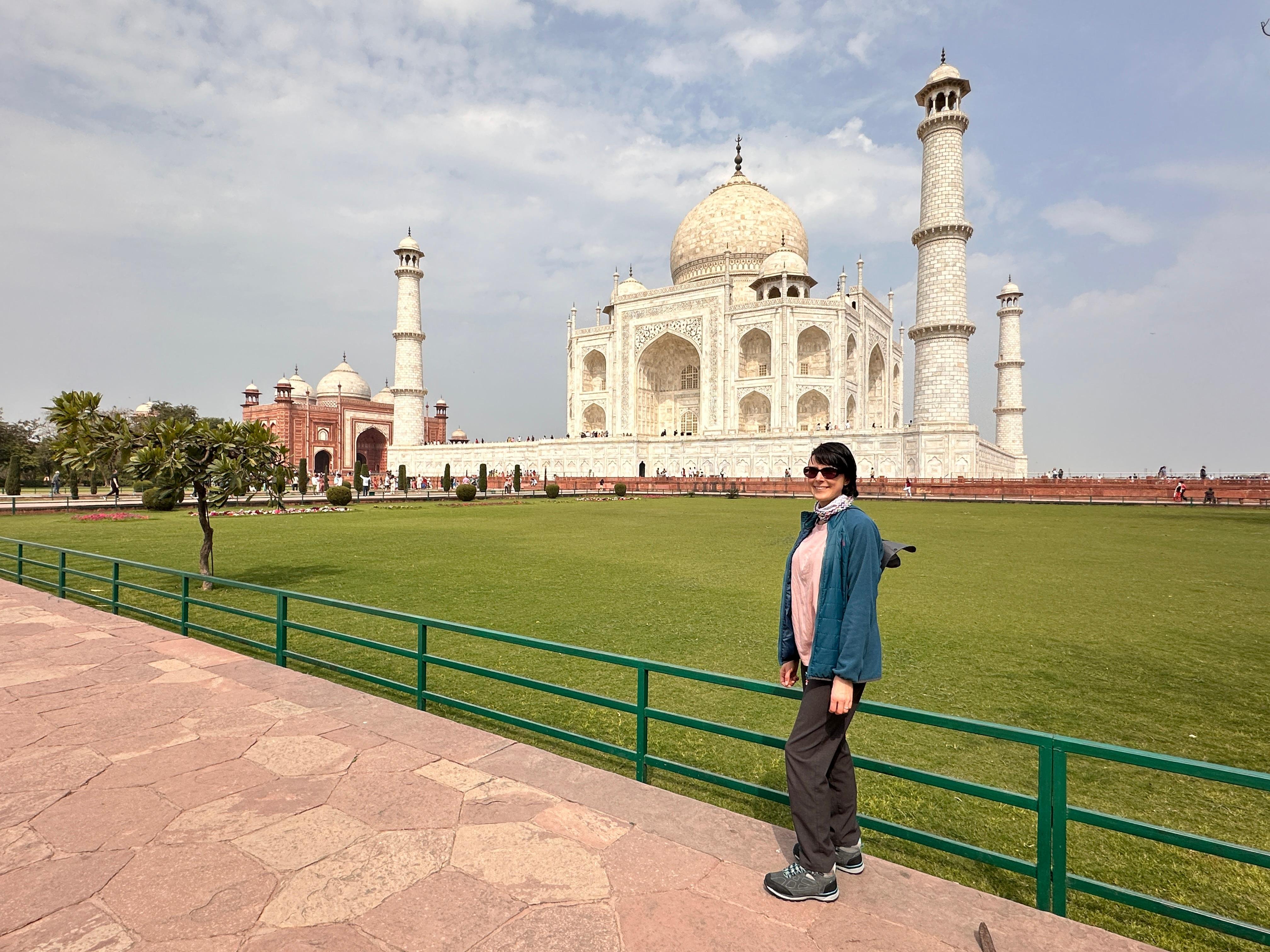
This white marble mausoleum was commissioned in 1632 by Shah Jahan to house the tomb of his wife. It stands as a pinnacle of Mughal architecture.

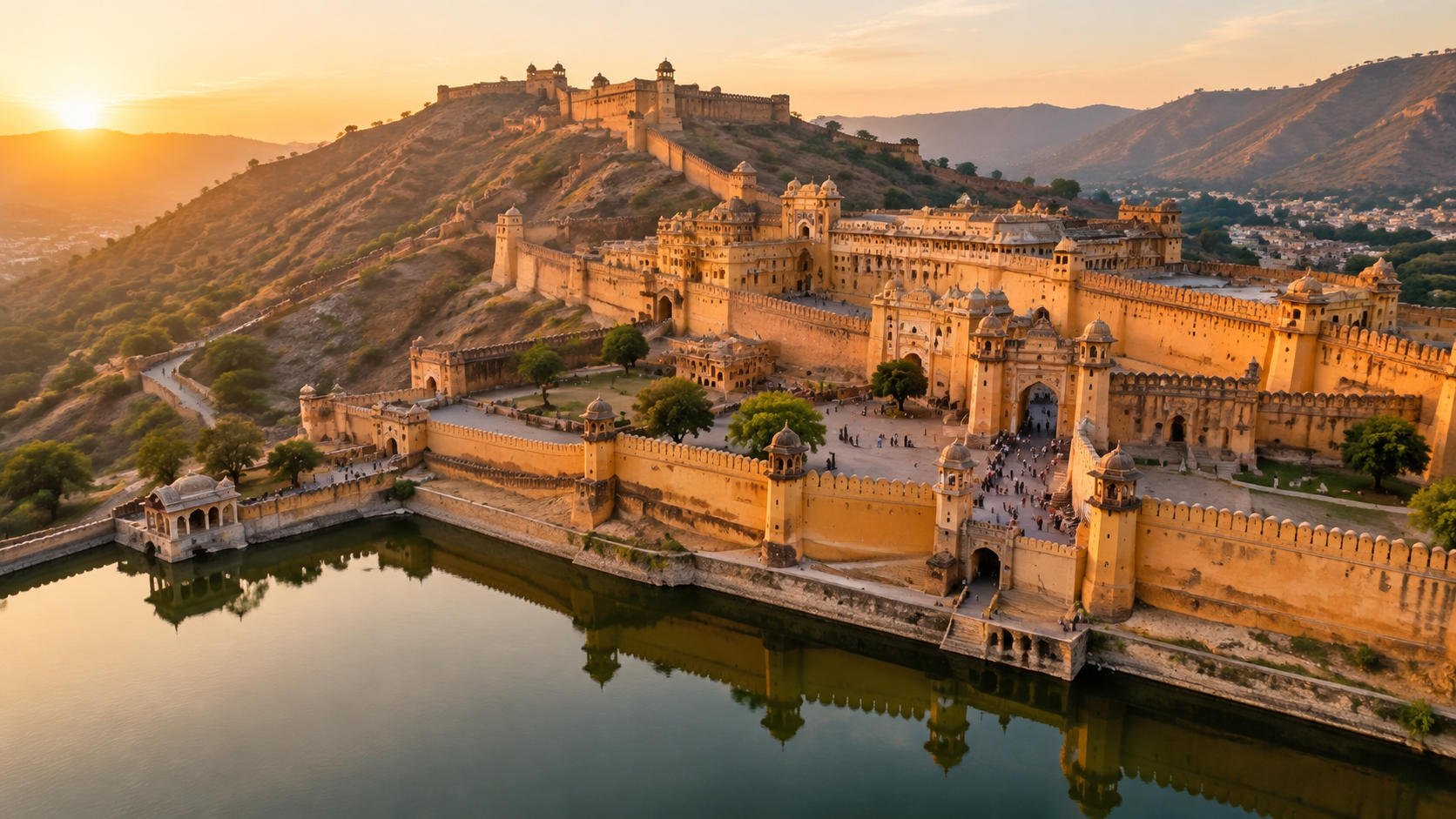
Amber Fort

Located in Jaipur, this fort features a massive complex of red sandstone and marble. It was completed in 1592 by Raja Man Singh.

Red Fort

This historic fortification served as the main residence of the Mughal Emperors for nearly 200 years. Its walls span over 2 kilometers.

Humayun's Tomb

Commissioned in 1569, this garden tomb was the first of its kind in the Indian subcontinent. It influenced the design of the Taj Mahal.

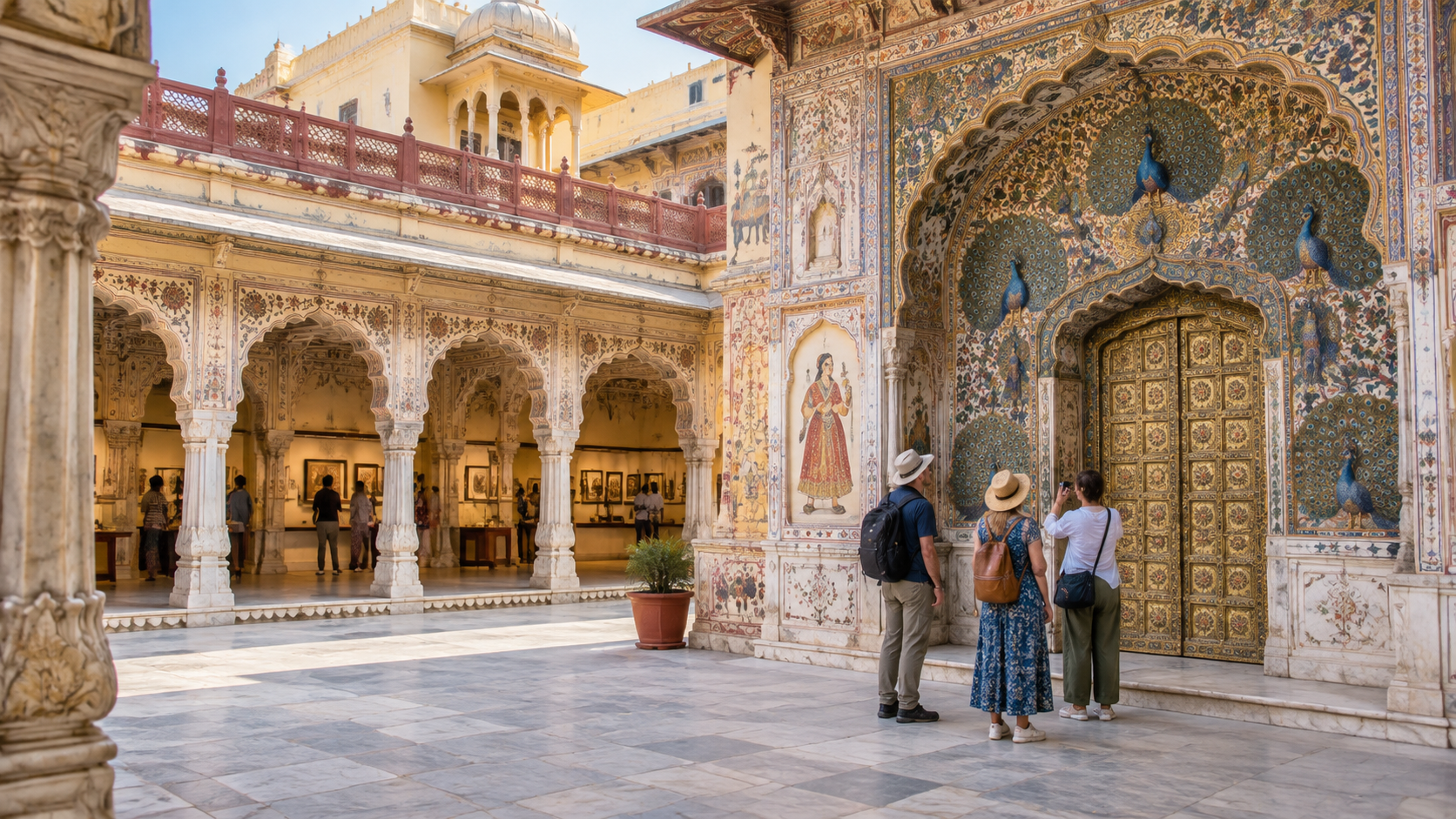
City Palace

A palace complex in Jaipur that includes the Chandra Mahal and Mubarak Mahal. It remains a residence for the royal family.

The experience

What visiting Golden Triangle India is really like

You arrive in Delhi before dawn and begin at Humayun's Tomb, walking the sandstone causeways while the gardens are still empty and the marble inlay catches low-angle light.

Read more Show less

By mid-morning you're inside the Red Fort's Diwan-i-Khas, standing where the Peacock Throne once sat beneath a Persian inscription promising paradise. The drive to Agra takes four hours on the Yamuna Expressway; you check into your hotel by early afternoon and reserve the Taj Mahal for the following sunrise.

You enter through the western gate at six, the white dome silhouetted against a violet sky, and walk the reflecting pools as the marble transitions from shadow to luminous white. The inlaid calligraphy — Quranic verses in black marble — becomes legible only when you're close enough to touch the stone. You spend two hours circling the platform, then drive to Agra Fort and climb the octagonal tower where Shah Jahan spent his final years gazing at his wife's tomb.

Jaipur is a five-hour drive west. You arrive in time for Amber Fort's sound-and-light show, but the next morning is the real encounter: you climb the fort's ramparts at eight and walk through the Sheesh Mahal, where a single candle flame multiplies into a thousand points of light across mirrored walls. By noon you're in the City Palace courtyard, studying the four-gate threshold that represents the seasons, then stepping into Hawa Mahal's honeycombed interior — five stories of narrow staircases and apertures framing the street below.

Everything You Need to Know

Your complete Golden Triangle India guide

All the details about your upcoming adventure in one place

Golden Triangle India Tour Overview

The golden triangle india tour connects Delhi, Agra, and Jaipur in a compact circuit showcasing Mughal architecture, Rajput palaces, and vibrant bazaars. Golden triangle india tour tickets typically include UNESCO heritage sites like the Taj Mahal, Amber Fort, and Qutub Minar, with expert guides revealing the cultural layers behind each monument. This iconic route pairs historical depth with logistical ease, ideal for first-time visitors to northern India.

The Golden Triangle India tour traces a 720-kilometer equilateral loop connecting Delhi, Agra, and Jaipur — three vertices that together hold more UNESCO World Heritage Sites than any comparable distance on the subcontinent.

The circuit earned its name in the 1960s when India's tourism ministry mapped the route for its density of Mughal and Rajput monuments, its geometric neatness on paper, and its accessibility by rail and road. Today the triangle remains the country's most-traveled itinerary, drawing over four million visitors annually to a corridor where every fifty kilometers yields another fort, tomb, or palace.

Delhi anchors the circuit's northern point with seven centuries of layered capital cities — from the Qutb Minar's twelfth-century sandstone to Humayun's Tomb's Persian-inflected symmetry, completed in 1572 and later studied by the architects of the Taj Mahal. The city's Red Fort, built by Shah Jahan between 1638 and 1648, encloses eighty-two hectares of audience halls, private chambers, and marble pavilions, its Lahori Gate opening onto what was once the Mughal Empire's ceremonial axis. New Delhi's India Gate and Rashtrapati Bhavan, completed in 1931, form the twentieth-century counterpoint — Edwin Lutyens' imperial geometry now repurposed as the seat of the world's largest democracy.

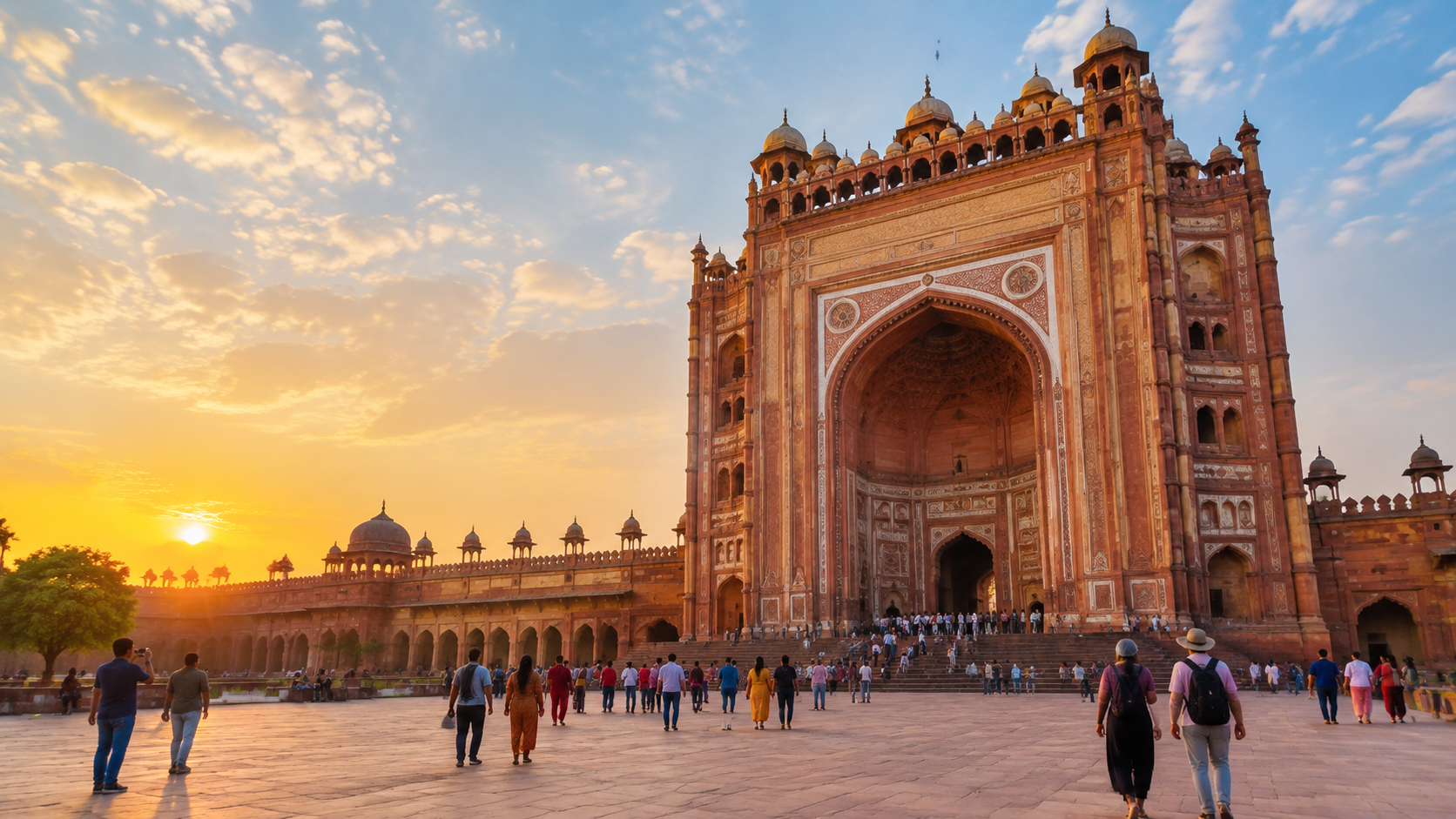
Agra, 230 kilometers south, condensed Mughal power into a thirty-kilometer stretch of the Yamuna River. The Taj Mahal, completed in 1653 after twenty-two years of construction, required twenty thousand laborers and materials transported from Rajasthan, Punjab, Tibet, and Sri Lanka — white Makrana marble, red sandstone, jade, turquoise, lapis lazuli. Agra Fort, Shah Jahan's own prison in his final years, overlooks the mausoleum from two kilometers upstream, its double walls rising sixteen meters and enclosing a city within a city. Fatehpur Sikri, forty kilometers west, stands as Akbar's short-lived capital from 1571 to 1585, abandoned when its water sources failed but preserved as a complete Mughal planned city in red sandstone.

Jaipur closes the triangle's western vertex with Rajput military architecture adapted for courtly life. Maharaja Sawai Jai Singh II founded the city in 1727 according to Shilpa Shastra principles — a nine-block grid aligned to the cardinal directions, its streets wide enough for elephant processions. The City Palace complex, still partially occupied by Jaipur's royal family, layers courtyards and galleries begun in 1729 and expanded through the twentieth century. Hawa Mahal's 953-windowed façade, built in 1799, allowed royal women to observe street festivals unseen. Amber Fort, eleven kilometers north, served as the Kachwaha Rajput capital for six centuries before Jaipur's founding, its hilltop ramparts enclosing mirror-inlaid chambers and a four-level garden courtyard fed by stepwells.

Golden Triangle India tour packages typically span five to seven days, with dedicated transport between cities and curated itineraries balancing monument access with craft workshops, bazaar walks, and regional cuisine. Most packages include Agra at sunrise — the Taj Mahal's white marble shifts from grey to rose to blinding white as the sun clears the Yamuna — and Jaipur's evening aarti ceremonies. The circuit's compact geometry allows additions: Ranthambore National Park for Bengal tiger sightings, Pushkar's camel fair in November, or Bharatpur's Keoladeo wetlands for migratory waterfowl.


The Golden Triangle traces a 720-kilometer loop holding more UNESCO sites than any comparable distance on the subcontinent.

Dress code

Modest clothing covering shoulders and knees is recommended when visiting religious sites on your golden triangle india tour tour. Some temples require removing footwear before entering.

Bags & security

Expect security screenings at major historical sites during your golden triangle india tour tickets journey. Large backpacks are often prohibited and should be left in secure vehicles.

Photography

Photography is permitted in most outdoor areas of the golden triangle india tour landmarks. Tripods often require special permits at state-protected heritage sites.

Families & strollers

Family-friendly travel is common, though child-friendly amenities vary by location. Strollers may be difficult to maneuver in uneven ancient stone courtyards.

Accessibility

Wheelchair access is limited at older historical structures on the golden triangle india tour. Modern sites offer better infrastructure for mobility-impaired visitors.

Food & drink

External food is frequently prohibited inside specific monuments. Bottled water is essential for staying hydrated throughout your golden triangle india tour.

Not allowed

× Weapons × Large suitcases × Drones × Alcohol × Tripods × Professional camera gear × Food items in monuments × Tobacco products × Firearms × Sharp objects × Flammable materials

What to bring

✓ Comfortable walking shoes ✓ Sunscreen ✓ Bottled water ✓ Valid photo ID ✓ Local currency ✓ Hat ✓ Sunglasses

Opening hours

Mon 00:00–23:59
Tue 00:00–23:59
Wed 00:00–23:59
Thu 00:00–23:59
Fri 00:00–23:59
Sat 00:00–23:59
Sun 00:00–23:59

How to get there

At a glance

Operating Hours

00:00–23:59

Address

Delhi, Agra, and Jaipur, India

Accessibility

Varies by monument across the circuit

Best arrival

06:00–10:00

Circuit Type

Geographical tourist route

Getting there

Taxi · 6-8 hours between cities · Moderate

Private cars provide the most flexibility for the golden triangle india tour circuit.

Train · 3-5 hours between cities · Budget friendly

Express trains connect major city hubs efficiently.

Cancellation policy

As a geographical circuit, individual site bookings within a golden triangle india tour package typically follow the operator policy. Entrance fee is 0 INR for the route itself, though specific monuments require individual admission.

Plan your time

Structuring Your Golden Triangle India Tour Itinerary

Recommended time

5-7 days

Planning your golden triangle india tour requires balancing travel between Delhi, Agra, and Jaipur to absorb the architectural heritage of these historic cities. Allocate extra time for golden triangle india tour tours if you prefer a slower pace, as crowds swell mid-day at popular monuments. While golden triangle india tour tickets are not required for the circuit itself, securing entry to specific heritage sites early ensures a smoother experience before the afternoon heat and tourist volume peak.

Crowd levels through the day

06:00–09:00 Light
09:00–12:00 Moderate
12:00–15:00 Heavy
15:00–18:00 Moderate
18:00–21:00 Light
Plan ahead

Best time to visit Golden Triangle India

Weather · crowds · average price — dots go green to amber to red as each metric rises.

October–March

Cooler temperatures make this the prime window for a golden triangle india tour trip. Days are pleasant for walking through monuments.

April–June

Expect high heat levels that reach peak intensity. Outdoor sightseeing is best done during the 06:00–10:00 arrival window.

July–September

Monsoon season brings humidity and greenery. Expect occasional rain during your golden triangle india tour.

Insider tips

Helpful tips for visiting Golden Triangle India

Early start

Plan to start your day at 06:00 to avoid mid-day heat. This arrival window is recommended for all golden triangle india tour travelers.

Guided tours

Hiring a certified guide enhances the historical context of each landmark. Ensure they are authorized by the local tourism board.

Where to meet

Golden Triangle India meeting points

Delhi Airport

IGI Terminal 3

Primary arrival hub for golden triangle india tour tours

Get directions
The story

Historical Foundations of the Golden Triangle India Tour

The Golden Triangle India tour emerged in the 1970s as India's tourism ministry sought to package the country's most accessible Mughal and Rajput monuments into a coherent circuit. Delhi, Agra, and Jaipur form an approximately equilateral triangle on the map, each vertex anchored by UNESCO World Heritage architecture. The route capitalized on existing rail and road infrastructure laid during British colonial rule, when these three cities served as administrative and military hubs. By 1982, the circuit had appeared in guidebooks under its current name, reflecting a deliberate effort to streamline itinerary planning for international visitors unfamiliar with India's vast geography. Delhi's role traces to 1639, when Shah Jahan relocated the Mughal capital from Agra and commissioned the Red Fort and Jama Masjid. The city's layered history spans seven distinct dynastic capitals, but the golden triangle india tour highlights primarily the 17th-century Mughal core. Agra became the Mughal seat under Akbar in 1556, and the Taj Mahal, completed in 1653, remains the route's visual centerpiece. Shah Jahan's white-marble mausoleum for Mumtaz Mahal required 20,000 laborers and artisans drawn from across Persia and Central Asia, embedding Timurid architectural grammar into the Indian Plains. Jaipur introduces the Rajput architectural departure. Founded in 1727 by Maharaja Sawai Jai Singh II, the city followed Vastu Shastra planning principles, with gridded streets and the iconic pink sandstone facades painted uniformly in 1876 to welcome the Prince of Wales. The Amber Fort, perched above the city, predates Jaipur itself by several centuries and illustrates the Hindu-Rajput military aesthetic distinct from Mughal symmetry. This tonal shift—from Islamic domes and minarets in Delhi and Agra to Hindu courtyards and chhatris in Jaipur—gives the golden triangle india tour its cultural arc. Package tours proliferated after India's economic liberalization in 1991, when visa reforms and private tour operators standardized the Delhi-Agra-Jaipur loop as a five- to seven-day introductory itinerary, cementing the circuit's status as the country's most-traveled heritage route.

1556

Akbar establishes Agra as the Mughal capital, initiating a century of monumental construction.

1639

Shah Jahan relocates the Mughal seat to Delhi and begins the Red Fort complex.

1653

Completion of the Taj Mahal in Agra after 22 years of construction under Shah Jahan's commission.

1727

Maharaja Sawai Jai Singh II founds Jaipur according to Vastu Shastra urban planning.

1876

Jaipur's old city is painted terracotta pink to honor the visit of Prince Albert Edward.

1970s

India's tourism ministry coins the "Golden Triangle" designation to promote a Delhi-Agra-Jaipur circuit.

1982

The term "Golden Triangle" appears in major international guidebooks and tour brochures.

1991

Economic liberalization and visa reforms accelerate package tourism along the Golden Triangle route.

Photo spots

Top Photogenic Landmarks on a Golden Triangle India Tour

Taj Mahal Reflection Pool

Best light · Before 09:00

Stand at the center of the walkway to capture the white marble mausoleum reflected in the water. This provides the most recognizable symmetry for those on a golden triangle india tour.

Amber Fort Sheesh Mahal

Best light · 08:00–10:00

Position yourself in the center of this mirrored palace to capture the intricate glass mosaics and floral carvings. The delicate craftsmanship is best highlighted by soft morning light.

Red Fort Diwan-i-Khas

Best light · Before 09:00

Frame your shot through the arched red sandstone pillars looking toward the inner courtyard. This historic Delhi landmark offers a clear view of the complex masonry.

Mehtab Bagh Viewpoint

Best light · Golden hour

Located across the Yamuna River, this garden offers a panoramic perspective of the monument without the crowds found in typical golden triangle india tour tours. It provides a unique angle of the structure at sunset.

Amber Fort Ganesh Pol

Best light · Before 09:00

This ornate gateway features detailed frescoes and high arches that serve as a classic backdrop for heritage portraits. It is a central feature for those booking golden triangle india tour tickets.

Gallery

Moments from Golden Triangle India

Food & drink

Dining Experiences Across Golden Triangle India Tour Packages

Exploring the culinary landscape near a golden triangle india tour offers a diverse journey through spice-rich regions. Visitors can find everything from bustling street food markets in Delhi to refined Mughal-influenced kitchens in Agra and royal Rajasthani dining halls.

Karim's

€€

Casual Dining

Located near Jama Masjid, this historic spot serves authentic Mughlai curries and kebabs that define Delhi's flavor profile. It is ideal for those seeking a heritage meal during their golden triangle india tour tours.

Customer Reviews

What travelers say about Golden Triangle India

Real experiences from real travelers

4.4
Based on 2,400 reviews
1 ★ 1250
2 ★ 950
3 ★ 1800
4 ★ 4200
5 ★ 18600
R
Rajesh K.
India · 2026-09-18

Perfect introduction to Mughal heritage

Our golden triangle india tour covered Delhi, Agra, and Jaipur over six days in late September. The Taj Mahal visit was scheduled for early morning to avoid crowds and harsh light. Our guide explained the pietra dura inlay technique used throughout the marble surfaces. Each city offered distinct architectural styles from different periods of North Indian history.

E
Emma L.
United Kingdom · 2026-08-24

Well-paced circuit

The three-city route provided a solid overview of Rajput and Mughal monuments without feeling rushed. Amber Fort's elephant courtyard and mirror palace were highlights in Jaipur. We traveled by private car which allowed flexibility for rest stops between destinations. October weather was ideal with clear skies and manageable temperatures.

C
Carlos M.
Spain · 2026-07-12

Architectural contrast

Delhi's Red Fort showed impressive defensive design with its massive sandstone walls and bastions. The shift to Agra's marble mausoleums demonstrated different imperial priorities. Fatehpur Sikri felt less crowded than other sites, giving us time to examine the carved sandstone panels without being hurried. Our driver navigated the highway sections efficiently.

Y
Yuki T.
Japan · 2026-06-30

Solid foundation itinerary

This golden triangle india tour tour provided context for understanding Mughal expansion and decline across three centuries. Jaipur's Hawa Mahal facade was undergoing partial restoration during our June visit. The astronomical instruments at Jantar Mantar were more sophisticated than expected. Heat was significant mid-day so we adjusted our schedule to visit indoor spaces during peak sun.

P
Patricia S.
United States · 2026-05-19

Exceeded practical expectations

Qutub Minar's tower construction and calligraphy were explained thoroughly by our local guide in Delhi. The drive from Agra to Jaipur took roughly four hours with one comfort stop. Our golden triangle india tour tickets included skip-the-line access at major monuments which saved considerable time. Humayun's Tomb gardens were meticulously maintained with symmetrical water channels.

H
Hans B.
Germany · 2026-04-28

Efficient heritage circuit

The three-city combination makes logistical sense as distances are manageable and each destination offers distinct architectural periods. Agra Fort's red sandstone chambers provided views across to the Taj Mahal. We visited during shoulder season which meant moderate crowds and pleasant evening temperatures for walking. Photography opportunities were abundant at all major sites.

M
Mei W.
Singapore · 2026-09-03

Comprehensive route design

This classic North India landmarks circuit balanced monument visits with travel time effectively. The pietra dura workshops near Agra demonstrated traditional inlay techniques still practiced today. Jaipur's bazaars offered textiles and blue pottery between our fort visits. Our guide arranged early entry at the Taj which made a substantial difference in crowd density.

L
Lucas R.
Brazil · 2026-08-11

Practical heritage experience

Our golden triangle india tour tours spanned seven days including buffer time for longer exploration at each site. Delhi's Lotus Temple provided modern architectural contrast to the Mughal-era structures. The road network between cities was in good condition with clear signage. Sunset views from Nahargarh Fort overlooking Jaipur offered panoramic perspective on urban layout.

S
Sophie D.
France · 2026-07-05

Functional but standard

The circuit covers essential North Indian monuments efficiently though the route is heavily traveled by tour groups. Amber Fort's mirror work in the Sheesh Mahal was impressive despite some restoration scaffolding. June heat required early starts and midday breaks. Photography restrictions inside certain palace rooms limited documentation opportunities.

M
Michael O.
Australia · 2026-06-14

Well-structured introduction

This classic triangle route connected three distinct regional capitals with different architectural vocabularies. The Agra itinerary allowed adequate time at both the Taj Mahal and Agra Fort without feeling compressed. Our driver maintained punctual pickup times throughout. Jaipur's City Palace complex demonstrated residential Rajput design versus the defensive structures at Amber Fort.

FAQ

Golden Triangle India — frequently asked questions

Everything you need to know for your journey

Around the corner

More to see near Golden Triangle India

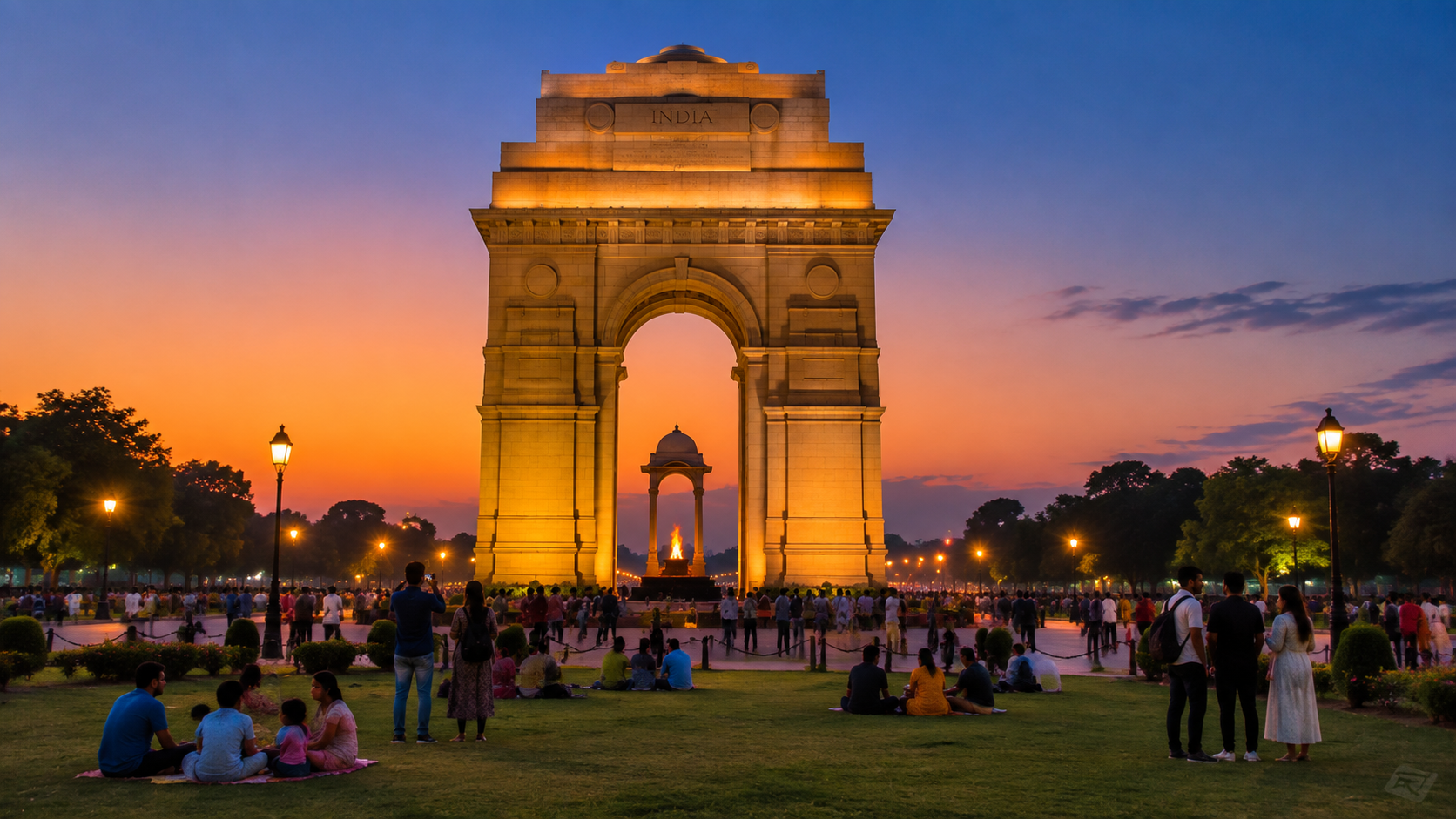
India Gate

0 min

landmark

War memorial located in the heart of Delhi. It serves as a prominent focal point for the city.

Jama Masjid

0 min

landmark

One of the largest mosques in India constructed by Shah Jahan. The courtyard accommodates thousands of worshippers.

Where to stay

Where to stay near Golden Triangle India

Delhi Hotels

0 min

luxury

Wide range of high-end international chains.

Agra Guesthouses

0 min

budget

Simple lodging options near the Taj Mahal.

Ready for Adventure?

Join thousands of happy travelers who have discovered this incredible experience

Book Your Experience Now